
When discussing the most financially successful actors in contemporary cinema, the conversation inevitably leads to figures who have transcended mere entertainment to become cultural institutions. One such individual is Denzel Washington, whose career spanning over four decades has positioned him as one of the most celebrated and financially accomplished performers in the industry. The journey from theater stages to commanding multimillion-dollar film contracts represents not merely a story of artistic achievement, but also a masterclass in strategic career building and shrewd business acumen. Understanding Denzel Washington’s net worth provides valuable insights into how elite entertainment professionals build and maintain substantial wealth in an industry marked by volatility and constant change.
| Category | Details |
|---|---|
| 💰 Current net worth | $300 million |
| 🎬 Primary income sources | Acting, producing, directing |
| 📊 Annual earnings range | $60-80 million (peak years) |
| 🏆 Major accolades | 2 Academy Awards, 3 Golden Globes, 1 Tony Award |
| 🏠 Real estate portfolio | Multiple properties worth tens of millions |
| 🤝 Charitable involvement | Boys & Girls Clubs of America, Nelson Mandela Children’s Fund |
Denzel Washington net worth breakdown : The $300 million fortune
The financial foundation of one of Hollywood’s elite performers is substantial and multifaceted. Denzel Washington’s estimated net worth of $300 million represents the culmination of strategic career decisions, consistent box office success, and diversified revenue streams. This considerable wealth did not accumulate overnight; rather, it evolved through decades of disciplined work and careful financial management. The figure places him firmly among the highest-paid actors in the industry, alongside a select group of peers who have achieved similar financial milestones.
The construction of this financial empire began with theatrical performances and evolved through television work before reaching its zenith in cinema. His compensation structure has evolved dramatically as his star power increased. Where early career roles commanded thousands, his contemporary film contracts demand multiples of millions per project. This trajectory demonstrates how consistent excellence and strategic career positioning can translate into exponential financial growth. The net worth figure of $300 million encompasses not only liquid assets and investments but also substantial real estate holdings and residual income streams from his extensive filmography.
| Revenue Stream | Estimated Contribution | Frequency |
|---|---|---|
| 🎞️ Film acting roles | $20+ million per film | Per project |
| 🎥 Producing credits | Varies significantly | Per project |
| 📺 Television & residuals | Passive income | Ongoing |
| 🏘️ Real estate appreciation | Substantial | Long-term |
| 🎭 Directing projects | Project-dependent | Selective basis |
How Denzel Washington builds his wealth : Revenue streams and earning strategies
The mechanisms through which substantial wealth is accumulated in the entertainment industry differ markedly from traditional career paths. For Denzel Washington, the construction of his financial portfolio reflects both artistic and entrepreneurial sensibilities. The primary vehicle for wealth generation remains his acting work, where he commands some of the highest per-film compensation in Hollywood. Industry reports consistently indicate that Washington receives approximately $20 million per film, establishing a baseline that few actors can match. This figure represents not merely payment for appearing in productions but recognition of his box office draw, critical credibility, and the financial security his presence provides to studio executives.
Beyond acting fees, Washington has strategically entered producing roles, which provide additional compensation alongside greater creative control. His decision to produce content allows him to participate in profit-sharing arrangements that can yield returns substantially exceeding his initial compensation. The financial model of film production creates opportunities for producers to benefit from backend earnings, residual payments, and ancillary revenue streams that extend far beyond the initial theatrical release. When productions achieve substantial commercial success, these arrangements can multiply his returns significantly.
His directing ventures represent another dimension of his wealth-building strategy. By assuming directorial responsibilities, Washington diversifies his income and establishes himself as a creative force capable of attracting financing and talent. While directing does not necessarily generate the immediate financial returns of acting, it establishes long-term credibility and opens additional revenue opportunities. The strategic balance Washington maintains between acting, producing, and directing ensures multiple income channels working simultaneously.
In particularly noteworthy instances, Washington’s contract negotiations have yielded exceptional compensation structures. For his role in “The Little Things” (2021), his initial $20 million compensation was supplemented by a remarkable $40 million bonus when the production shifted to streaming release strategy during the COVID-19 pandemic. This $60 million total compensation in a single project exemplifies how strategic positioning and market circumstances can dramatically inflate earnings in favorable conditions.
| Film Title | Year | Reported Compensation | Significance |
|---|---|---|---|
| Training Day | 2001 | $15+ million | Career peak role |
| American Gangster | 2007 | $40+ million | Double payment scenario |
| The Equalizer | 2015 | $20 million | Franchise establishment |
| The Little Things | 2021 | $60 million | Pandemic bonus structure |
| Gladiator II | 2024 | $20+ million | Recent major role |
Denzel Washington net worth from film career : Box office dominance and salary progression
The evolution of Denzel Washington’s compensation reflects the dramatic expansion of his market value across successive decades. His initial breakthrough in 1982 through the television series “St. Elsewhere” established him as a credible dramatic performer but provided modest financial compensation by contemporary standards. The subsequent transition to feature films marked a crucial inflection point in his earning potential. His early film roles, while garnering critical attention, did not command premium compensation; however, the accumulation of award recognition and proven box office appeal created conditions for exponential salary increases.
The acquisition of the Academy Award for Best Supporting Actor in “Glory” (1989) represented a watershed moment in his career trajectory. This recognition positioned him as an actor of exceptional caliber, justifying elevated compensation for subsequent roles. The financial transformation became pronounced by the mid-2000s, when major studios recognized Washington’s consistent ability to attract audiences and generate significant box office revenue. The investment thesis became clear: allocating substantial resources to secure his participation in productions yielded financial returns exceeding the compensation required.
Omar Sy net worth : The French actor’s remarkable financial success in entertainment
His filmography demonstrates remarkable consistency in commercial performance. Films such as “American Gangster” (2007), grossing over $266 million globally, exemplify how his presence translates to substantial revenue generation. The “Man on Fire” (2004) and “Inside Man” (2006) further established patterns of commercial viability. This consistent box office success created negotiating leverage that translated directly into enhanced compensation packages. By the 2015 release of “The Equalizer,” Washington had achieved such pronounced market dominance that he could command premium compensation while simultaneously accessing additional revenue through backend participation arrangements.
The cumulative box office success across his extensive filmography exceeds $4 billion worldwide, a figure that contextualizes his compensation demands and justifies the premium pricing studios place on his involvement. Each successful film created conditions enabling higher compensation demands on subsequent projects. The mathematical relationship between market draw and compensation becomes evident when examining the trajectory: as his films generated increasingly substantial returns, his negotiating position strengthened proportionally.
Real estate investments and property portfolio: Building wealth beyond entertainment
The construction of substantial wealth requires deployment of capital into appreciating assets beyond the primary income-generating enterprise. Denzel Washington demonstrated sophisticated financial acumen by establishing a real estate portfolio of considerable significance. In the late 1990s, Washington and his wife Pauletta commissioned the construction of a grand residence within the exclusive Beverly Park community in the hills of Beverly Hills. This acquisition represented a strategic entry into premium real estate at a moment when property values in this enclave were considerably lower than contemporary prices.
The primary mansion encompasses approximately 30,000 square feet, while an adjacent guest house spans 5,000 square feet. The initial investment for this custom construction was reported at approximately $2.7 million during the late 1990s. Contemporary real estate assessments value this property at nearly $30 million, representing a tenfold appreciation over approximately two decades. This appreciation exemplifies the wealth-building potential of strategic real estate acquisitions in premium markets. The property appreciation alone has contributed substantially to overall net worth growth independent of entertainment earnings.
Beyond the Beverly Hills residence, Washington expanded his real estate holdings with the April 2022 purchase of an 8,000-square-foot, six-bedroom condominium in Century City, California, for a reported $11 million. The seller was a member of the Saudi Arabian royal family, indicating the premium nature of this acquisition. Additionally, Washington maintains ownership of a valuable apartment on Central Park West in New York City, with assessments placing its value in the range of $13 million. These strategic placements in premier real estate markets ensure geographic diversification and exposure to distinct appreciating markets.
The cumulative value of Washington’s real estate portfolio likely exceeds $50 million, representing a significant component of overall net worth. Beyond immediate financial value, these properties provide substantial lifestyle benefits and serve as long-term wealth repositories that appreciate independently of entertainment industry fluctuations. The strategic deployment of substantial capital into real estate during favorable market windows demonstrates financial sophistication beyond typical entertainment industry patterns.
| Property | Location | Approximate Value | Year Acquired |
|---|---|---|---|
| Primary mansion | Beverly Hills | ~$30 million | Late 1990s |
| Guest house | Beverly Hills | Included above | Late 1990s |
| Condo | Century City | $11 million | April 2022 |
| Apartment | Central Park West | ~$13 million | Prior year |
Philanthropic endeavors and charitable contributions: Strategic giving and social impact
Understanding the financial architecture of exceptionally wealthy individuals requires examining not only wealth accumulation but also wealth distribution through philanthropic channels. Denzel Washington has consistently demonstrated commitment to various charitable organizations and social causes, channeling substantial resources toward causes reflecting his values. His association with the Boys & Girls Clubs of America represents a particularly significant commitment, having served as the organization’s national spokesperson since 1993 and maintaining board membership since 1995. This multi-decade involvement indicates genuine dedication extending beyond superficial celebrity association.
Washington’s charitable contributions extend to multiple organizations reflecting diverse social priorities. The Nelson Mandela Children’s Fund received substantial donations reflecting Washington’s commitment to international humanitarian causes. Fordham University, his alma mater, has benefited from significant financial support as Washington demonstrates loyalty to institutions that shaped his intellectual and artistic development. Additional charitable recipients have included the Fisher House Foundation, which serves military families, and Wiley College, a historically Black institution reflecting Washington’s support for educational institutions serving underrepresented communities. These diverse charitable allocations indicate a sophisticated philanthropic strategy addressing multiple social dimensions.
Don Cheadle net worth : From Hollywood breakthrough to financial success
The aggregate charitable contributions represent meaningful percentages of overall wealth, though specific figures remain somewhat opaque due to privacy considerations surrounding private giving. The pattern of strategic charitable involvement suggests annual contributions likely reaching several million dollars across these diverse organizations. Beyond direct financial contributions, Washington’s willingness to serve on boards and provide ambassadorial roles amplifies the impact of charitable work. His status as one of entertainment’s most respected figures lends credibility to organizations receiving his support, often generating additional philanthropic interest and engagement.
Career milestones and award recognition: Building credibility and market value
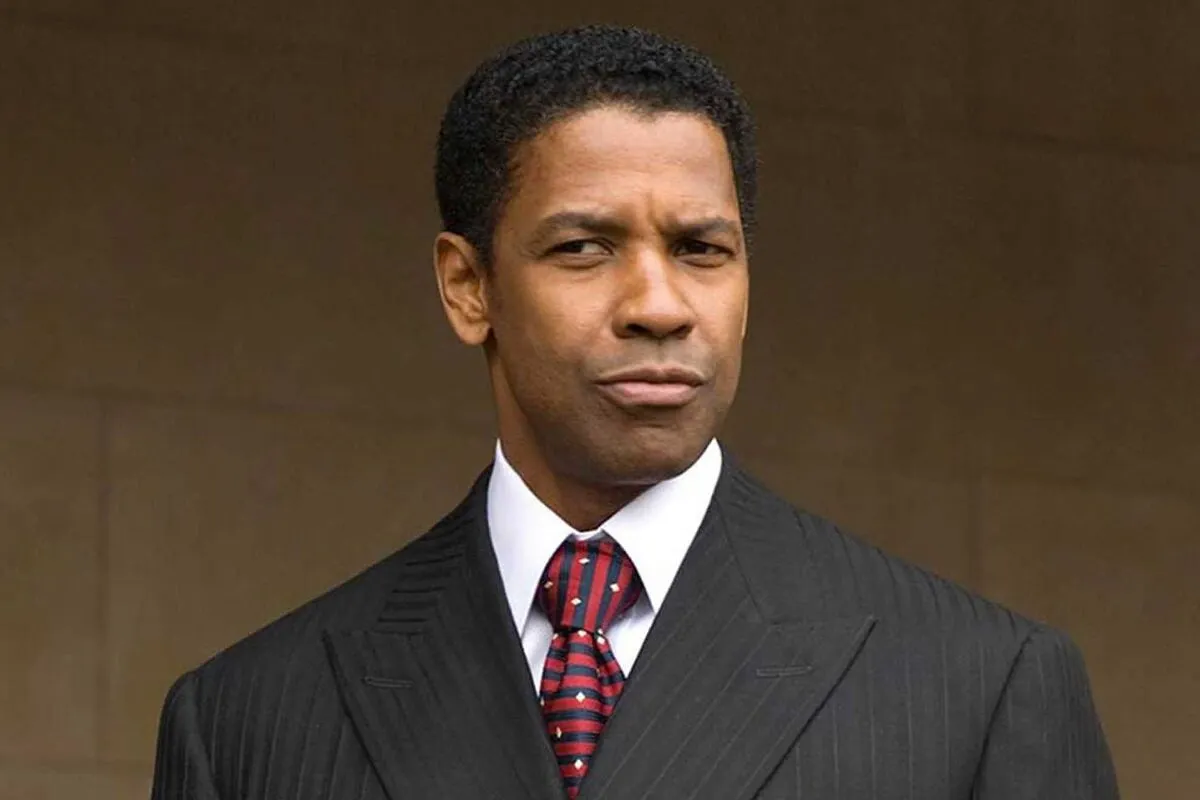
The relationship between artistic recognition and financial compensation follows predictable patterns in entertainment industries. Each major award Washington received corresponded with tangible increases in compensation and career opportunities. The Academy Award for Best Supporting Actor in “Glory” (1989) for his portrayal of a Civil War-era soldier established him as an actor of exceptional dramatic range. The subsequent Academy Award for Best Actor in “Training Day” (2001) further cemented his status among cinema’s elite performers. These highest-tier recognitions translated directly into leverage for enhanced compensation packages.
Beyond Academy Awards, Washington accumulated three Golden Globe Awards and a Tony Award, establishing credentials across multiple performance mediums. He received Emmy nominations and Grammy recognition, indicating versatility and respect across diverse artistic disciplines. In 2016, the Motion Picture Academy honored Washington with the Cecil B. DeMille Award, recognizing lifetime achievement and cultural impact. The 2019 AFI Life Achievement Award further validated his status among cinema’s most significant figures. The presidential Medal of Freedom in 2022 represented the highest civilian honor in the United States, acknowledging contributions transcending entertainment to encompass cultural leadership.
Each major recognition strengthened Washington’s market position and justified premium compensation demands. Studios recognized that association with multiple award-winning performances reduced production risk and enhanced prestige. The accumulation of awards created a narrative of consistency and excellence that proved invaluable in negotiating compensation packages. Film producers understood that securing Washington’s participation signaled quality to audiences and enhanced production credibility with industry professionals and financing sources.
The critical recognition extended beyond traditional industry awards to scholarly and intellectual acknowledgment. The New York Times designated Washington as the greatest actor of the 21st century in 2020, a distinction reflecting not merely contemporary performance but retrospective evaluation of career significance. This intellectual validation established Washington among the most consequential performing artists of the era, further justifying premium compensation and project selectivity.
Strategic career decisions: Selectivity and project choices affecting net worth
The expansion of Washington’s net worth reflects not merely compensation increases but also strategic selectivity regarding project involvement. Unlike certain high-earning actors who accept numerous roles annually, Washington maintains a deliberately selective approach to project participation. This strategy creates scarcity in the market, enhancing value and enabling premium compensation demands. By maintaining quality standards and limiting annual projects, Washington ensures each appearance carries significant market impact.
His decision-making regarding project selection demonstrates sophisticated understanding of career management. Washington tends toward roles offering substantial dramatic depth and opportunities for award recognition rather than pursuing purely commercial vehicles regardless of artistic merit. This approach maintains critical credibility while simultaneously generating commercial success, creating a reinforcing cycle where critical acclaim translates to commercial performance. The strategy contrasts with certain actors who prioritize quantity over quality, potentially diminishing long-term earning capacity through overexposure.
Washington’s foray into directing represents another strategic choice reflecting career evolution and financial sophistication. By assuming directorial control over projects such as “Antwone Fisher” (2002), Washington diversified his creative influence and established himself as a filmmaker rather than merely an actor-for-hire. This expanded creative role enhanced his negotiating position and opened revenue channels unavailable to performers limited to acting roles alone. The deliberate cultivation of multiple creative competencies created conditions for sustained financial growth across industry evolutions.
Comparative analysis: Denzel Washington among Hollywood’s financial elite
Positioning Denzel Washington net worth within the broader context of entertainment industry compensation reveals important patterns regarding wealth accumulation among elite performers. The $300 million figure places Washington among the highest-net-worth actors globally, comparable to industry peers such as Jerry Seinfeld, Shah Rukh Khan, and Jami Gertz. However, comparative analysis reveals that Washington achieved this financial status through fundamentally different pathways than certain contemporaries whose wealth derives substantially from television production rather than primarily theatrical performance.
The contrast between Washington’s compensation and certain younger actors who command $20-25 million per film reflects generational differences in Hollywood economics. Washington negotiated major contracts during the era when studio systems maintained greater pricing power, whereas contemporary young superstars operate within an entertainment ecosystem more fractured by streaming platforms and international production sources. Nevertheless, Washington’s sustained ability to command premium compensation throughout his seventh and eighth decades of life represents exceptional longevity compared to typical career arcs. Most actors experience declining earning capacity as they age; Washington has instead maintained or increased compensation alongside selective role choices.
The comparison with athletes’ financial trajectories reveals notable distinctions. Whereas elite athletes typically accumulate substantial wealth primarily during active careers followed by rapid income decline upon retirement, Washington’s financial model distributes income across extended decades with relatively stable or increasing compensation. His production company involvement and backend participation arrangements create income streams extending decades into the future from completed projects. This structural difference enables sustained wealth growth independent of active performance capacity.
Conclusion: The financial legacy and ongoing earnings potential
The examination of Denzel Washington’s financial architecture reveals a career constructed with careful attention to strategic positioning, quality maintenance, and diversified revenue generation. The $300 million net worth represents not merely accumulated compensation for individual performances but the cumulative result of decades of astute career management, shrewd real estate acquisitions, and strategic business involvement. Washington’s continued relevance into his seventies, evidenced by major film roles and award recognition, indicates ongoing earning capacity that will likely result in further wealth accumulation.
The financial trajectory established by Washington provides instructive lessons regarding wealth creation within entertainment industries. The consistent prioritization of quality over quantity, the strategic diversification of income sources beyond primary employment, and the sophisticated deployment of capital into appreciating assets collectively demonstrate financial sophistication. His ability to command premium compensation throughout extended career duration reflects both exceptional talent and business acumen.
Looking forward, Washington’s wealth will likely continue appreciating through multiple mechanisms: ongoing compensation for new projects, backend participation in prior productions achieving sustained commercial success, real estate appreciation in premium markets, and investment returns from accumulated capital. The sustainability of his financial position does not depend upon continued active performance but instead benefits from structural advantages accumulated across decades of disciplined work. The evolution of streaming platforms, international markets, and alternative distribution channels may create new opportunities for revenue generation from his extensive film catalog and production company involvement.
The financial success of Denzel Washington ultimately reflects broader principles of wealth creation applicable across industries: excellence attracts premium compensation, diversified revenue streams reduce risk, strategic asset allocation builds long-term wealth, and selective engagement maintains market value. His career trajectory and resulting financial achievement stand as testament to the potential returns available to those who combine talent with disciplined financial management and strategic career decision-making.